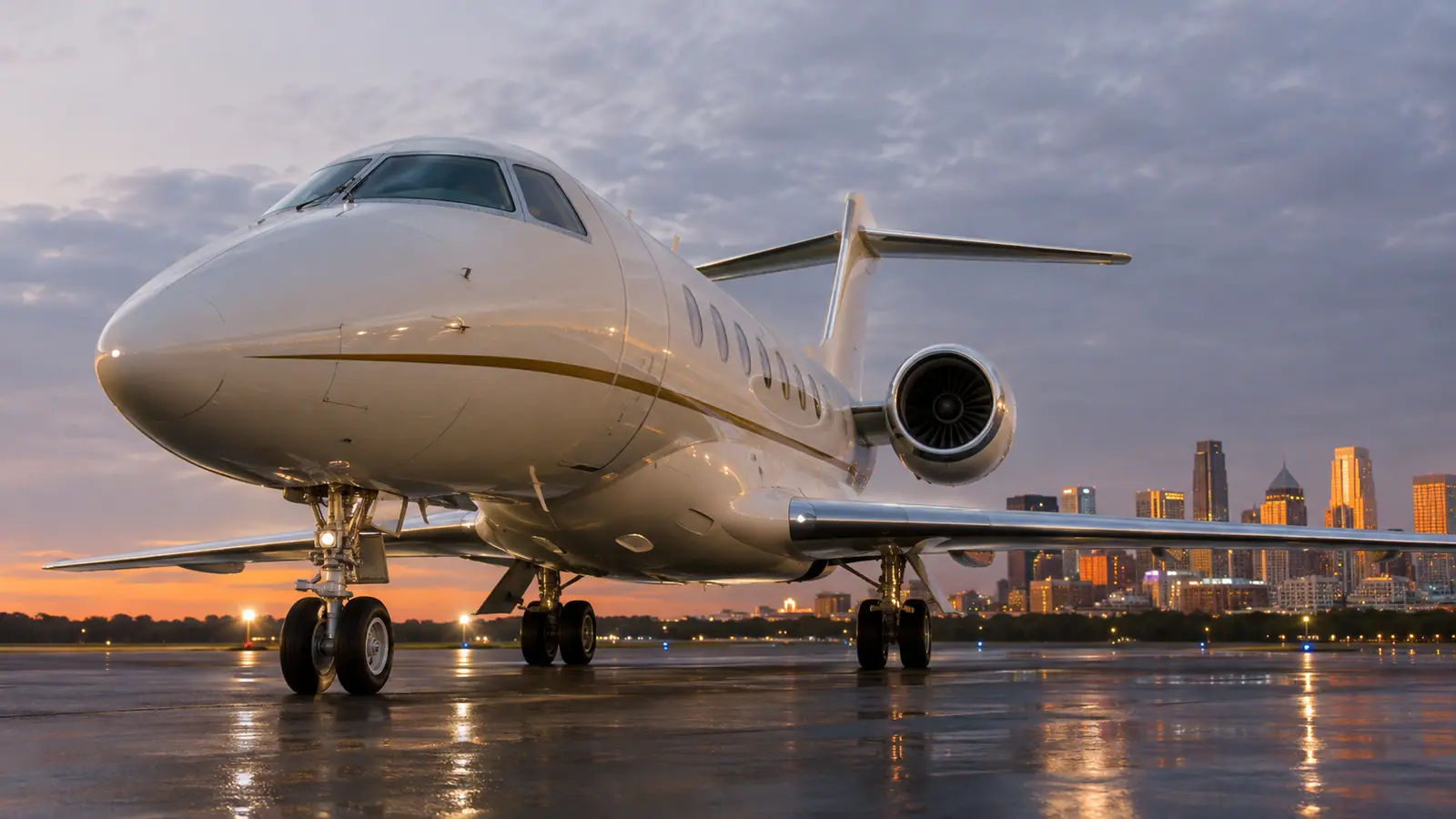
Private jets Austin
Chartering out of Austin comes down to two airports and a hot summer. Light jet pricing typically lands between $3,800 and $5,800 per hour. This guide covers what quotes look like and where the aircraft actually park.
Routes in and out of Austin
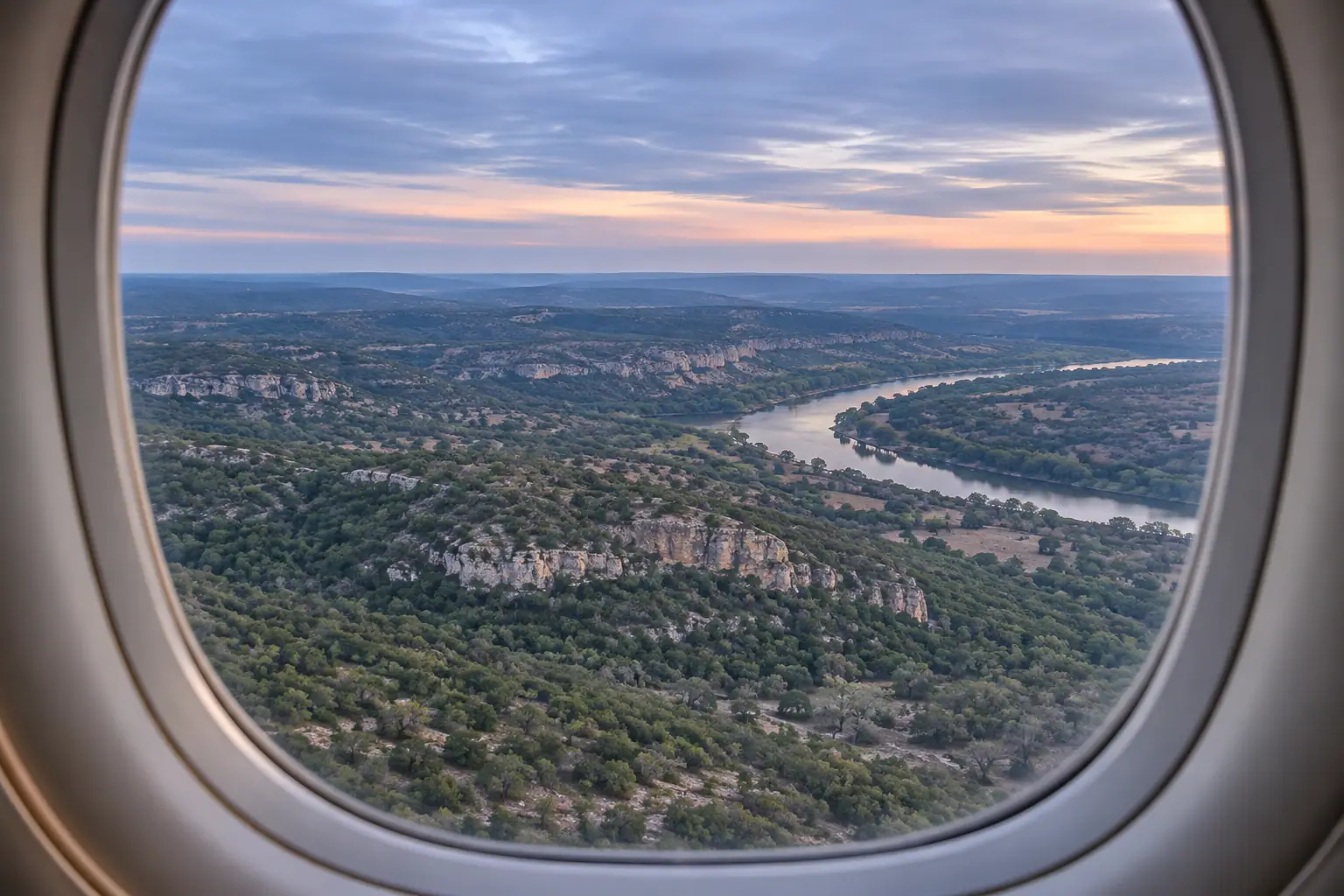
Dallas is the shortest common leg at 151 nautical miles and about 40 minutes, priced from $4,000 to $6,000 in a light jet. A Chicago departure at 832 nautical miles runs 2 hours 20 minutes for $9,000 to $13,500, and that route fills quickly around major conferences and festival weekends.
The long-haul board is where aircraft choice matters. New York and San Francisco both sit near 1,300 nautical miles at roughly 4 hours 14 minutes, $16,000 to $24,500. Boston at 1,453 nautical miles needs 4 hours 36 minutes, and Seattle at 1,534 is the longest domestic leg listed at 4 hours 48 minutes. International runs to Cabo San Lucas, Nassau and Turks and Caicos require CBP clearance on return, so build arrival windows that match the port's staffing rather than a tight connection. An Austin to Cabo flight at 783 nautical miles takes about 2 hours 13 minutes, short enough that a light jet handles it if payload allows.
- New York → Austin4h 14m
- Los Angeles → Austin2h 57m
- Chicago → Austin2h 20m
- Dallas → Austin0h 40m
- Atlanta → Austin2h 01m
- Washington, DC → Austin3h 01m
- Boston → Austin4h 36m
- Philadelphia → Austin4h 05m
- Denver → Austin1h 54m
- Phoenix → Austin2h 10m
- San Francisco → Austin4h 14m
- Seattle → Austin4h 48m
- Las Vegas → Austin2h 36m
- Nashville → Austin1h 53m
- Charlotte → Austin2h 28m
- Orlando → Austin2h 23m
- Austin → New York4h 14m
- Austin → Aspen2h 01m
- Austin → Phoenix2h 10m
- Austin → San Francisco4h 14m
- Austin → Los Angeles2h 57m
- Austin → Nassau3h 01m
- Austin → Cabo San Lucas2h 13m
- Austin → Turks and Caicos4h 36m
Airports for private jets Austin

Austin has two practical charter airports, and the right one depends on where you are starting and what aircraft you fly. Both sit roughly 1,090 miles from the strip reference in our data, so the choice is about surface access and runway, not distance.
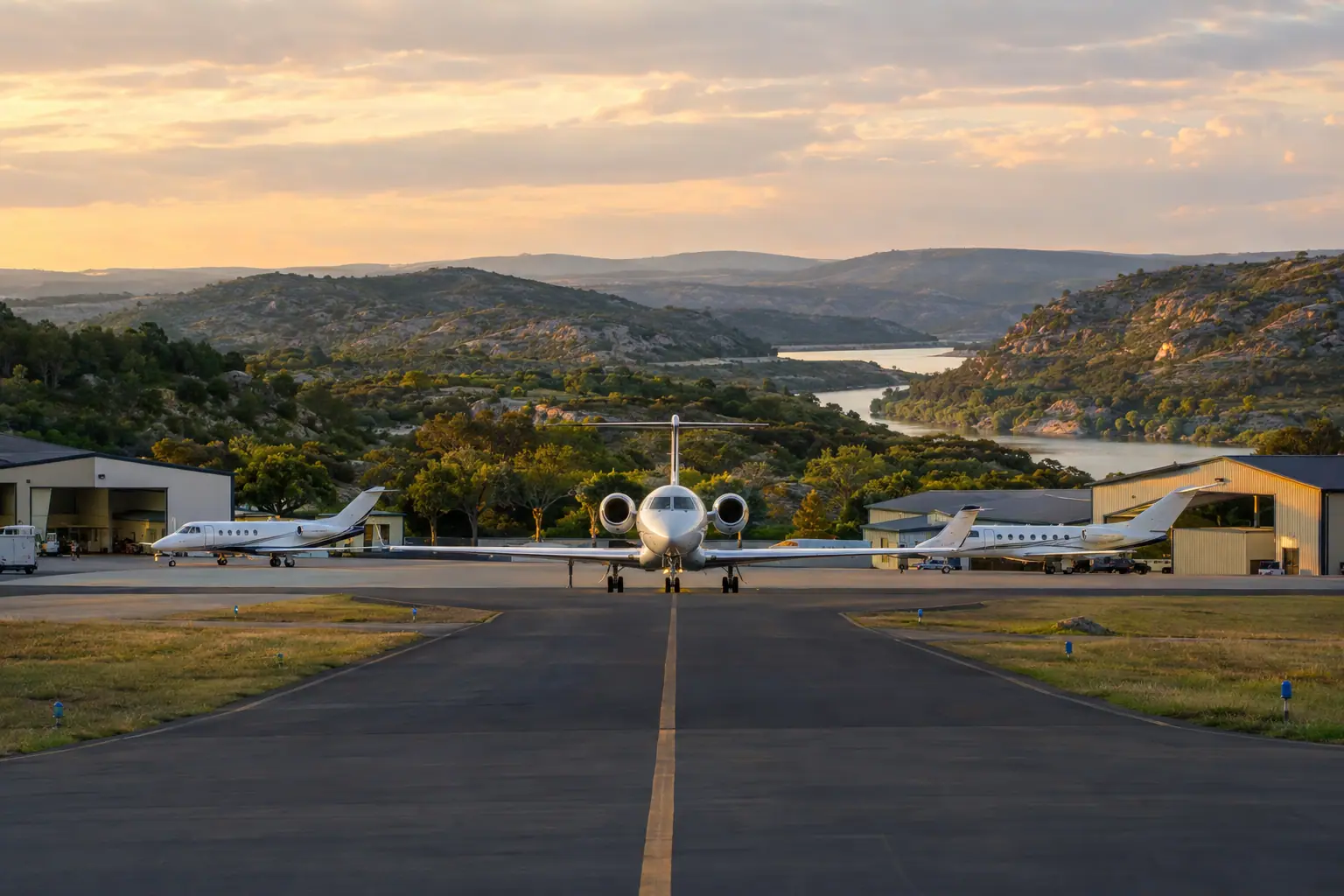
Austin Executive Airport
- KEDC code
- 6,025 ft runway
- 14 mi to Downtown Austin
Austin Executive Airport in Pflugerville is the general aviation field most charter travelers prefer, with a 6,025 foot runway at 620 feet elevation. Henriksen Jet Center and Cutter Aviation handle arrivals. July density altitude reaches about 3,200 feet and peaks near 3,800 at 115F, which trims payload on light jets departing in afternoon heat. If your meeting is north of downtown, then KEDC usually saves time on the ground; if you are heading to the Hill Country, the drive is comparable to Bergstrom.

Austin Bergstrom International Airport
- KAUS code
- 12,250 ft runway
- 7 mi to Downtown Austin
Austin Bergstrom International is the airline field, but its 12,250 foot runway and 542 foot elevation make it the better choice for heavy jets and long international legs. Atlantic Aviation, Signature Aviation and Henriksen Jet Center provide service. Density altitude tops out around 3,700 feet at 115F, less punishing than KEDC. If you are flying to the Caribbean or carrying a large group, then the longer runway and full CBP facilities matter more than the shorter drive.
When private jets Austin peak

March, October and the spring festival weeks are the busiest stretches for charter out of Austin, and aircraft book out earlier than the calendar suggests. A light jet requested three days out in mid-October may only be available from a distant base, which adds repositioning cost to the quote. Winter is milder, with January highs near 61F and about 8 wet days, and aircraft are generally easier to find on short notice.
The practical rule is to hold dates loosely and book early for anything tied to a fixed event. If your trip is flexible by a day, then shifting a departure can change the price meaningfully on routes like New York or Los Angeles where repositioning dominates the total. We tell you which legs are tight and which are not rather than quoting a single number and hoping.
Heat and density altitude in Austin
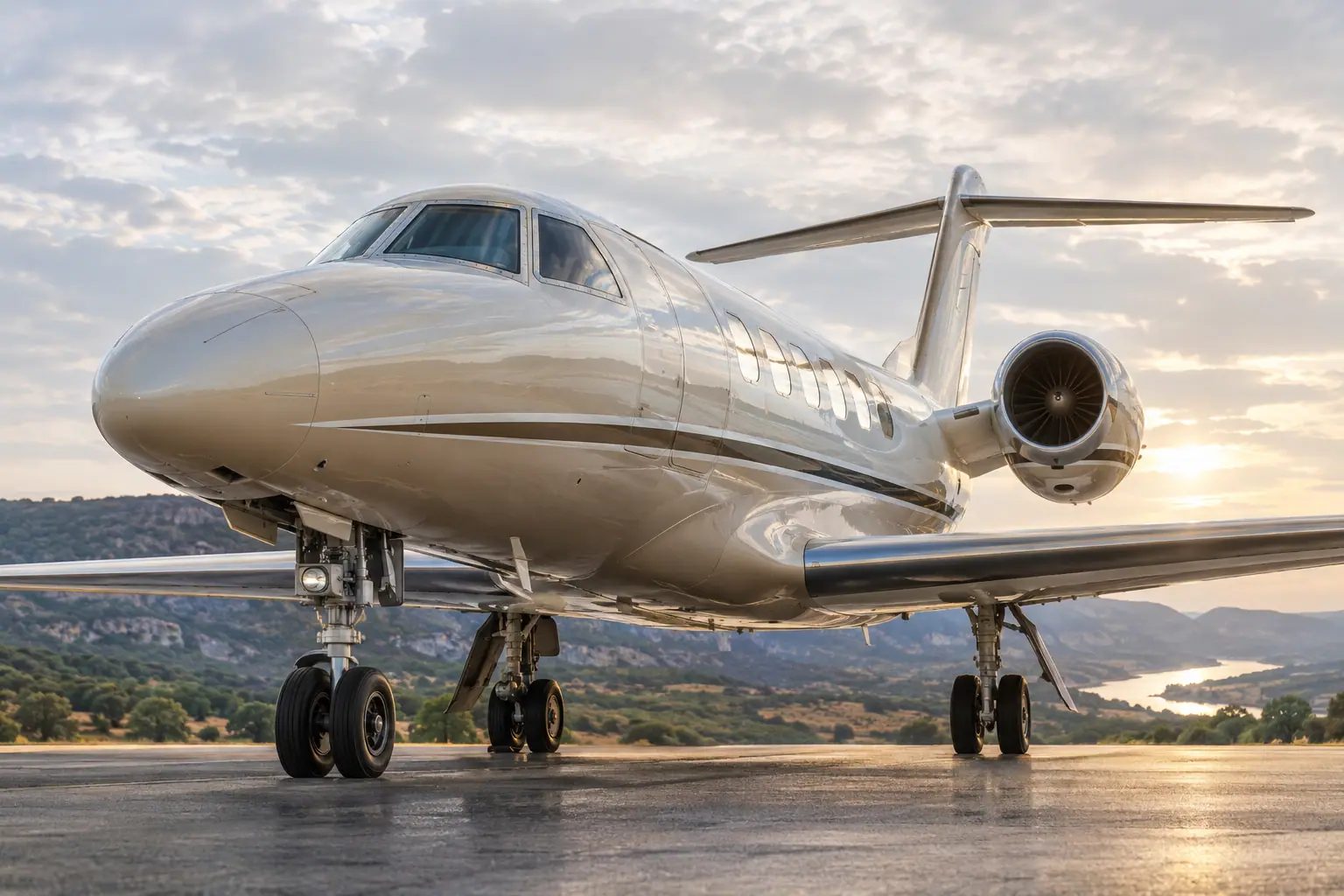
Austin's summer heat is the single biggest operational factor for private jets here. July and August highs reach 95F and 96F, and density altitude climbs to roughly 3,200 feet at both fields, peaking near 3,800 at 115F. Afternoon departures in August can force a fuel stop or a passenger offload on light jets, so early morning slots are worth asking for when your schedule allows.
This is not a safety problem; it is a performance calculation every crew runs. If the temperature is high and the runway is short at your destination, then the operator may propose a larger aircraft or a different departure time. May is the wettest month with about 15 wet days, and September storms can stack ground stops at both airports. We flag these windows when we send options so you can decide whether to build slack into the day.
| Month | Avg high | Wet days | KEDC DA | KAUS DA |
|---|---|---|---|---|
| Jan | 61°F | 8 | 900 ft | 800 ft |
| Feb | 65°F | 10 | 1,200 ft | 1,100 ft |
| Mar | 73°F | 10 | 1,700 ft | 1,600 ft |
| Apr | 79°F | 12 | 2,100 ft | 2,000 ft |
| May | 85°F | 15 | 2,500 ft | 2,400 ft |
| Jun | 91°F | 11 | 2,900 ft | 2,800 ft |
| Jul | 95°F | 8 | 3,200 ft | 3,100 ft |
| Aug | 96°F | 8 | 3,200 ft | 3,100 ft |
| Sep | 90°F | 9 | 2,800 ft | 2,700 ft |
| Oct | 82°F | 8 | 2,300 ft | 2,200 ft |
| Nov | 70°F | 9 | 1,500 ft | 1,400 ft |
| Dec | 65°F | 8 | 1,200 ft | 1,100 ft |
Days with rain means days recording 1 mm or more. Density altitude is figured at the mean afternoon high using a rough approximation. Each operator applies its own performance figures.
Which aircraft fit Austin missions
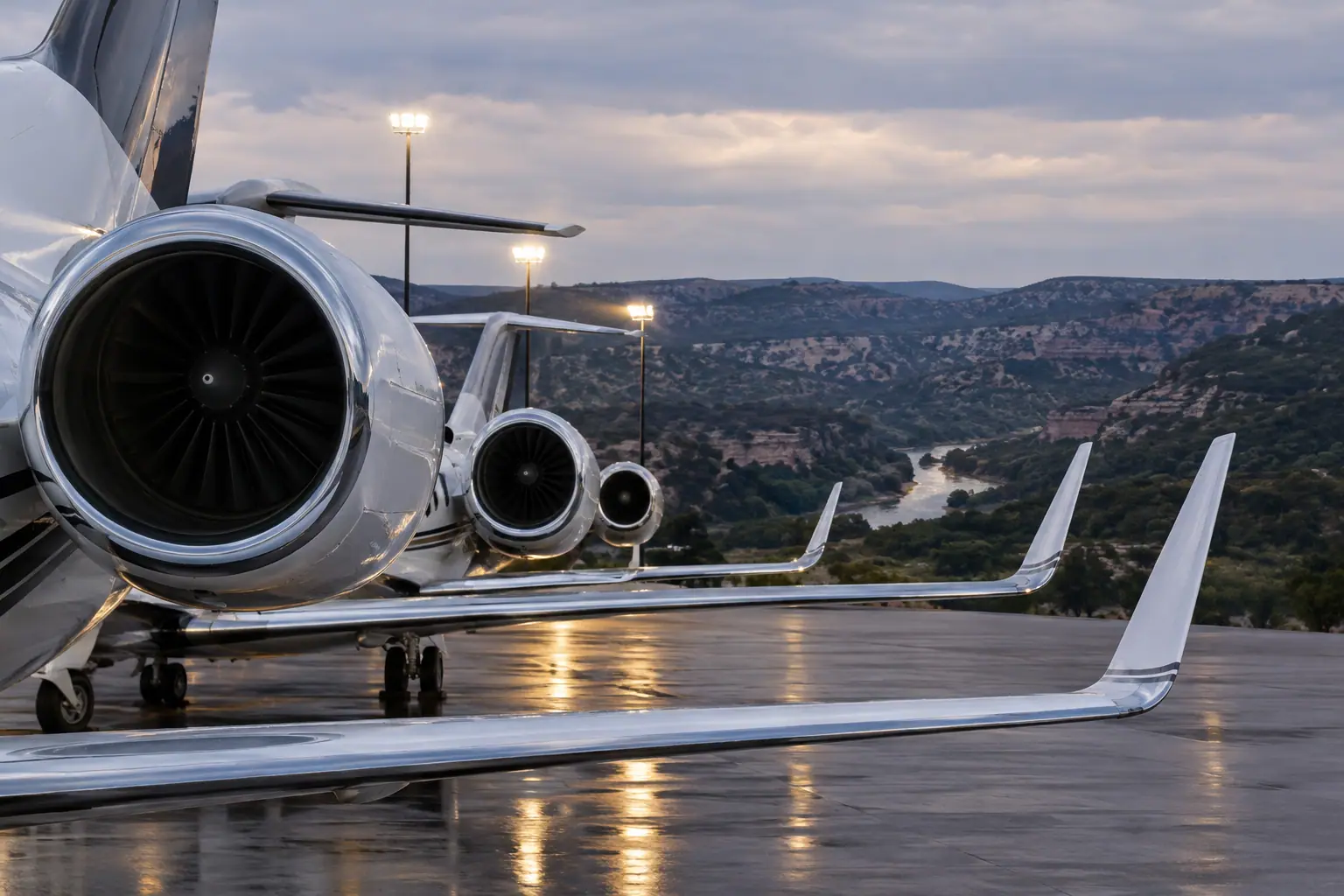
A light jet covers most Austin departures comfortably, cruising near 430 knots with 4 to 7 seats and about 1,400 nautical miles of range. That is enough for Chicago in 2 hours 20 minutes or Los Angeles in 2 hours 57 minutes. Turboprops near 300 knots suit the Dallas run when a light jet is booked out, and they can use shorter fields the jets pass on.
Midsize and super-midsize aircraft push range to 2,100 and 3,200 nautical miles, which opens Seattle at 1,534 nautical miles and the Caribbean legs without a fuel stop. Heavy jets, 10 to 14 passengers and 4,000 nautical miles, are what you book for a full team or a family plus luggage. We arrange flights through FAA Part 135 operators who hold operational control; we act as your agent under DOT Part 295, so the operating certificate belongs to them, not to us.
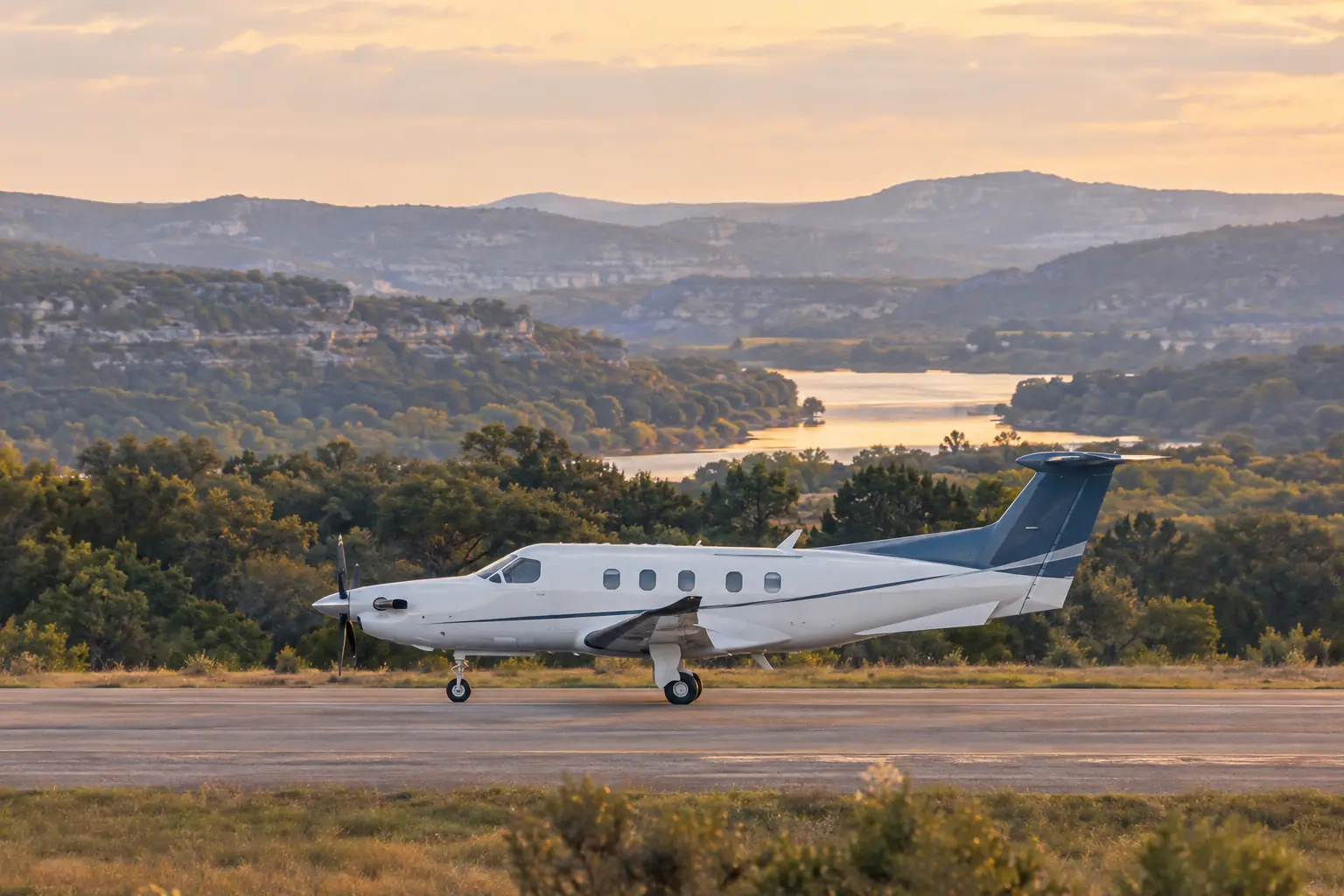
Turboprop
- 6-8 seats
- 300 kt cruise
- 1,500 nm range
Beechcraft King Air 350i, Pilatus PC-12 NGX
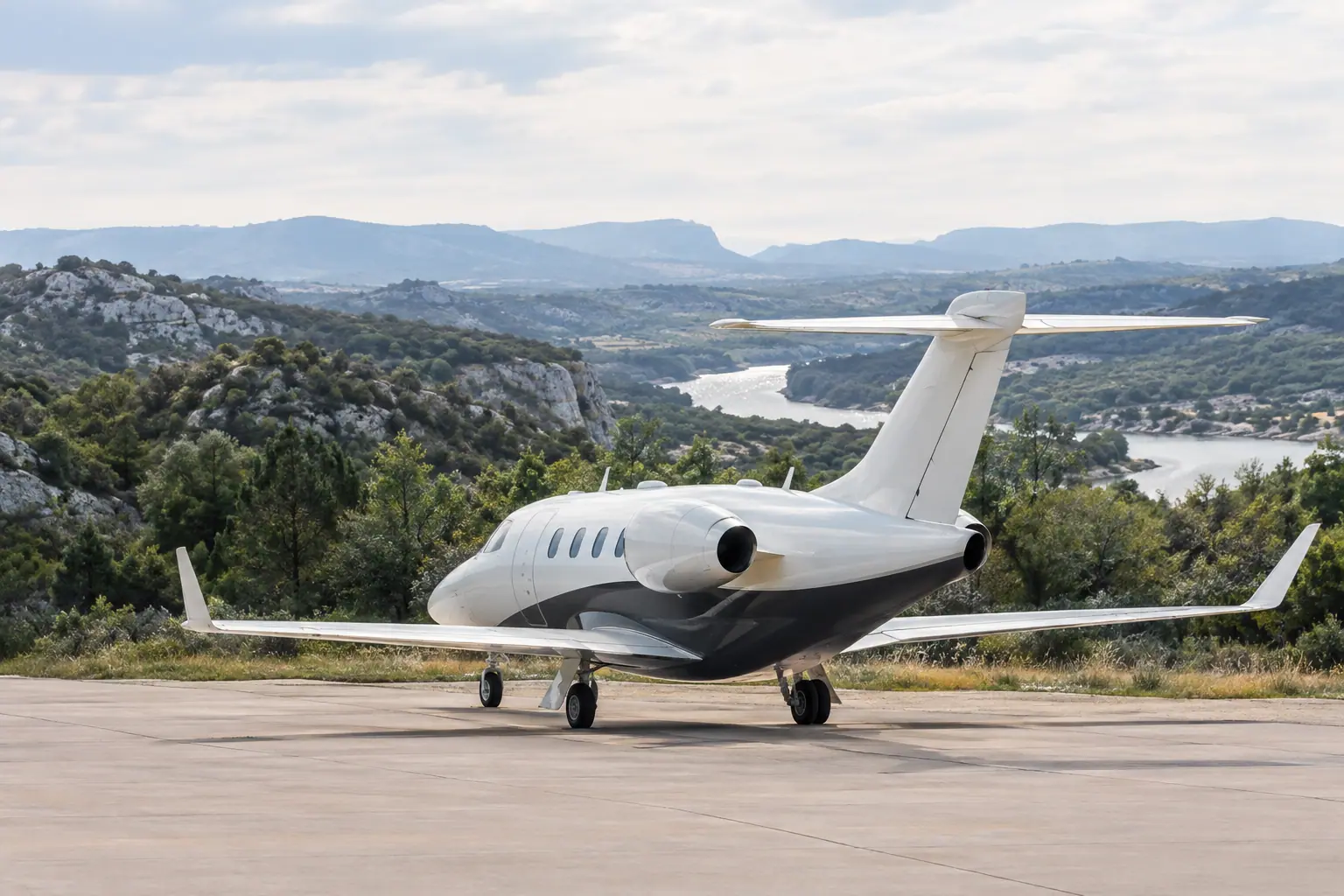
Light jet
- 4-7 seats
- 430 kt cruise
- 1,400 nm range
Cessna Citation CJ4 Gen2, Embraer Phenom 300E
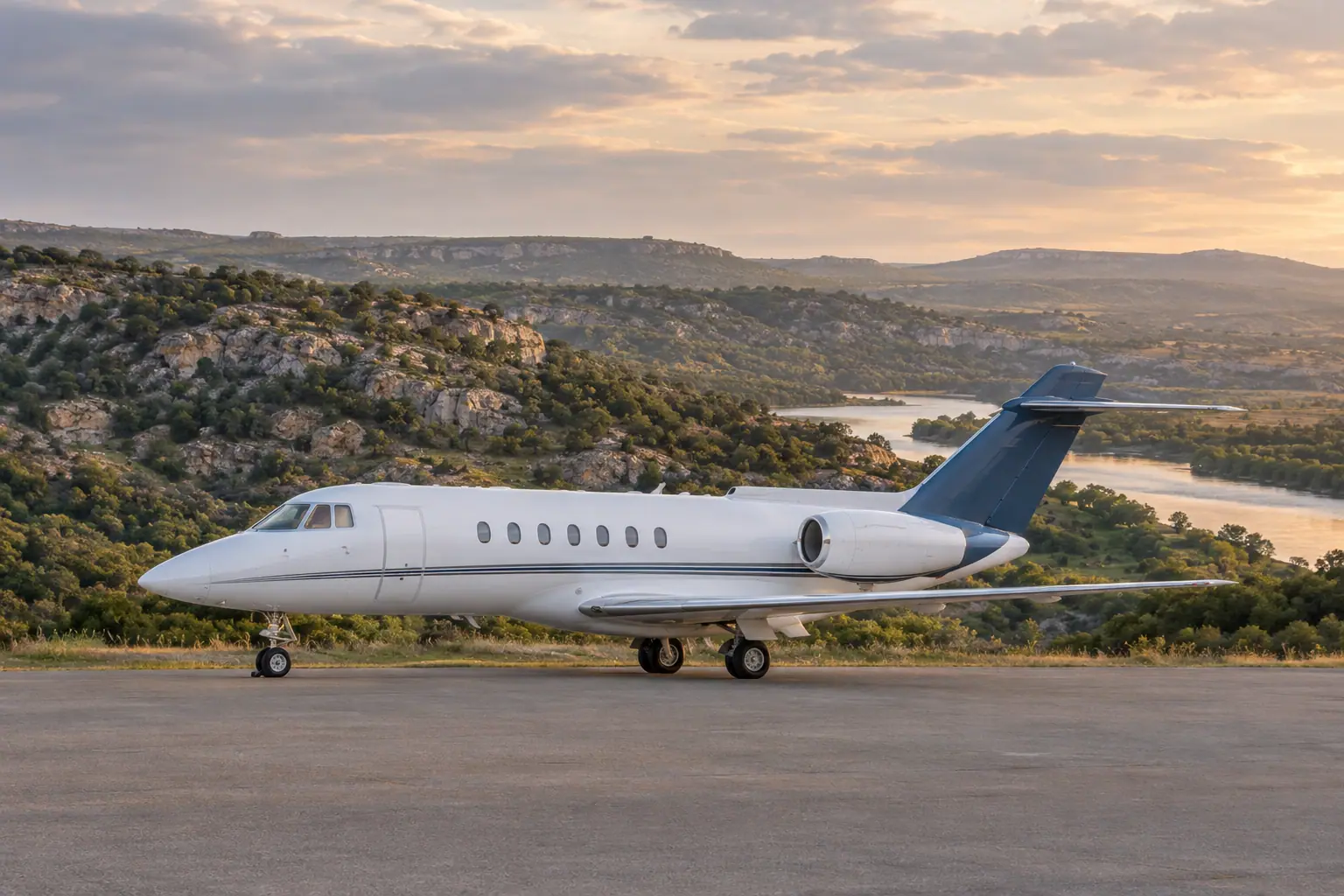
Midsize jet
- 7-9 seats
- 440 kt cruise
- 2,100 nm range
Hawker 800XP, Cessna Citation XLS+
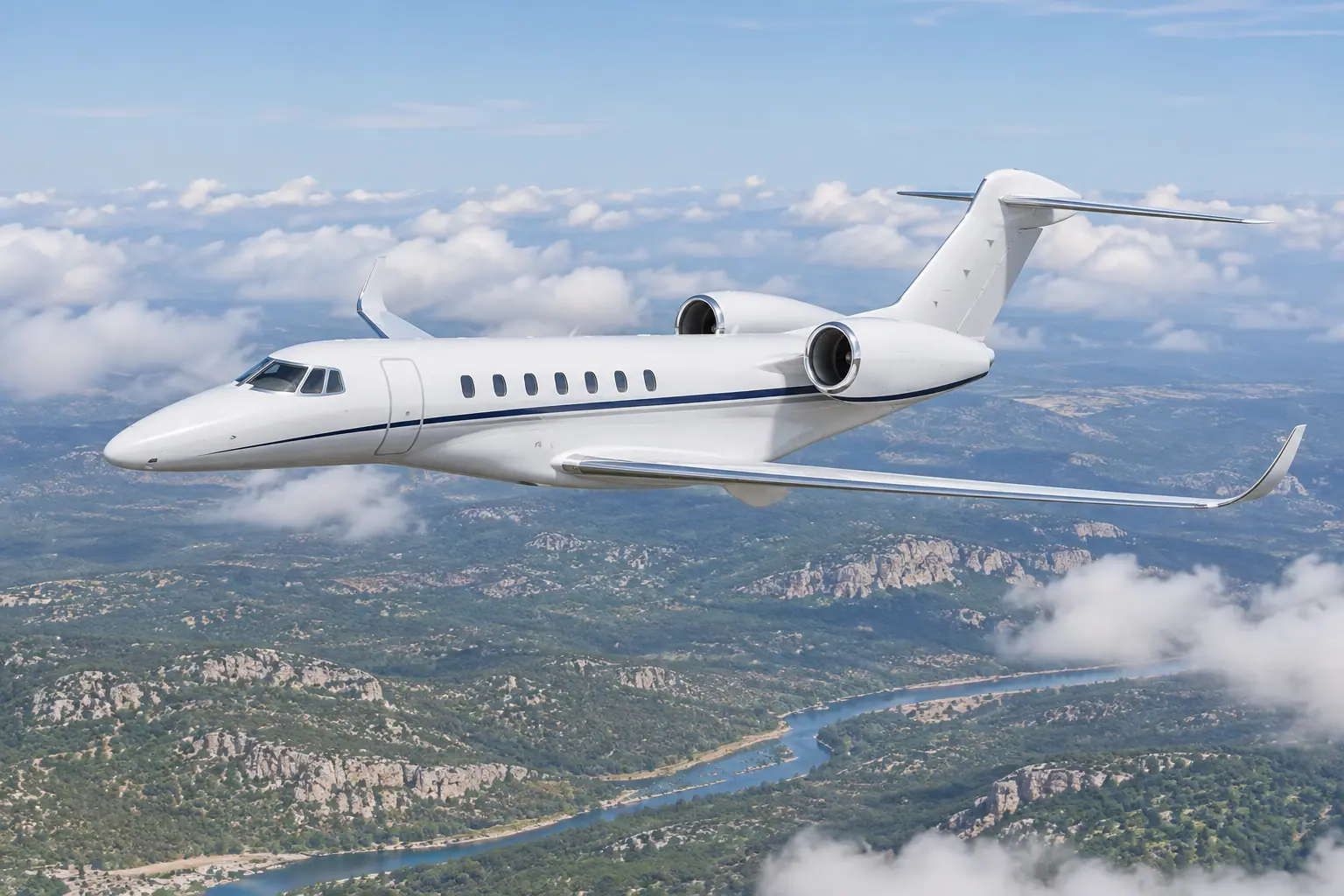
Super-midsize jet
- 8-10 seats
- 470 kt cruise
- 3,200 nm range
Gulfstream G280, Cessna Citation X+
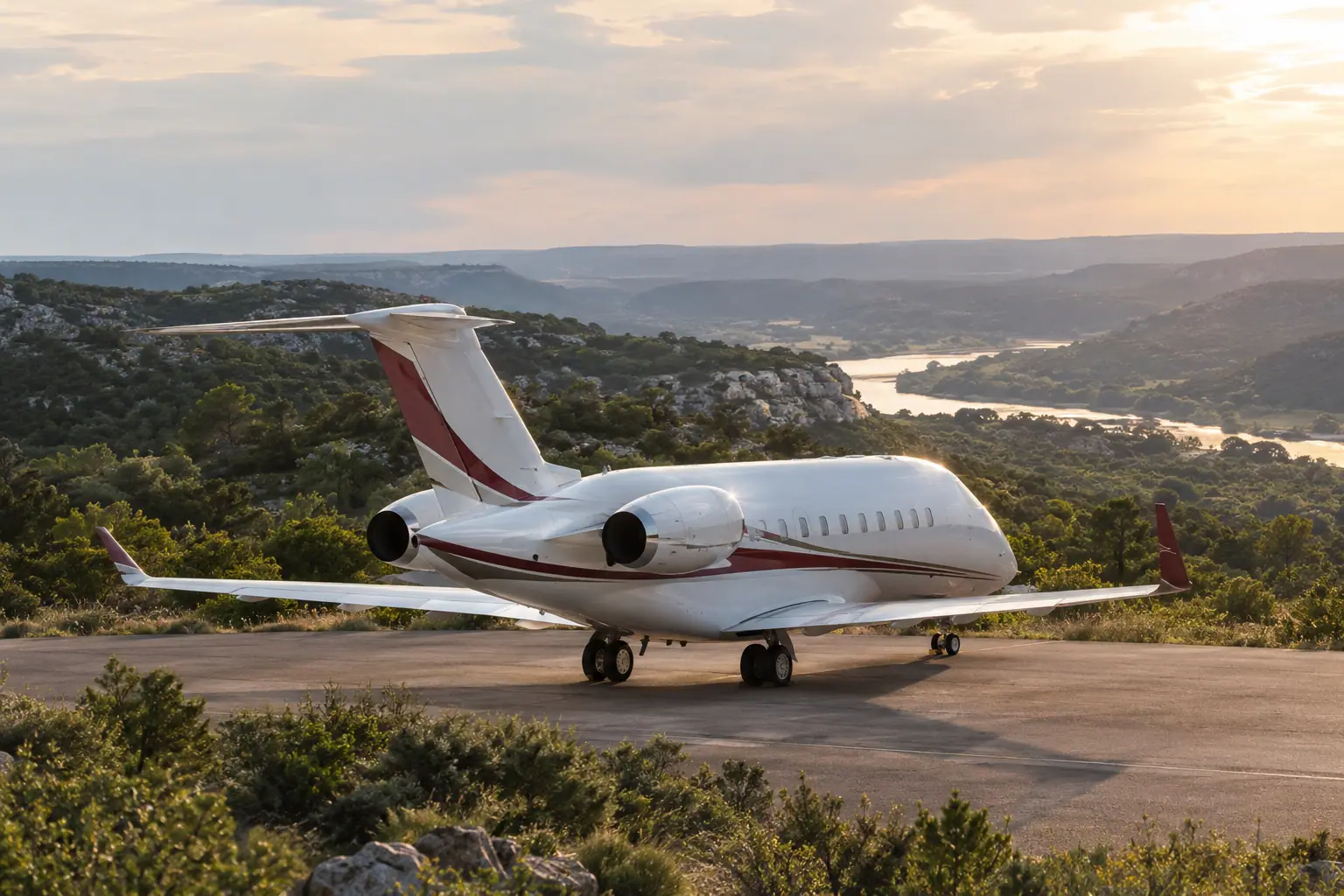
Heavy jet
- 10-14 seats
- 470 kt cruise
- 4,000 nm range
Bombardier Challenger 650, Dassault Falcon 900LX
What private jets Austin charter costs
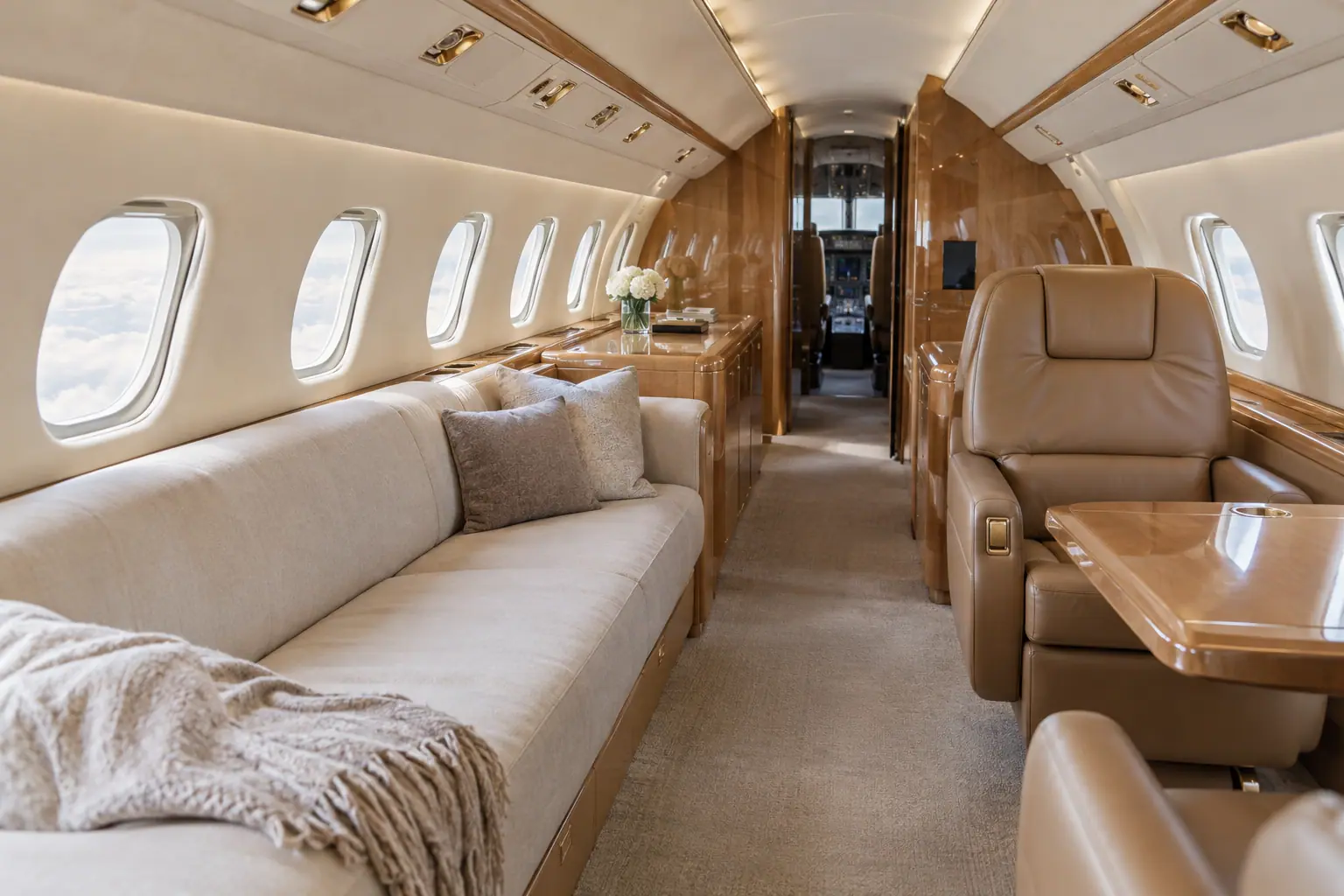
Light jet flights from Austin generally run $3,800 to $5,800 per hour, and a Dallas hop at $4,000 to $6,000 shows how short legs price out. Hourly rates are a starting point, not a quote; the operator's minimums, crew day and airport fees move the final number. Every figure here is an estimate, and the estimate you receive will be tied to a specific tail number and date.
Midsize aircraft sit around $5,200 to $7,800 per hour, super-midsize $7,200 to $10,000, and heavy jets $9,500 to $14,500. Turboprops start lower, roughly $2,200 to $3,500, which matters on a run like Dallas where block time is short. If your group is four people going to Denver, then a light jet at $7,000 to $11,000 is often the sensible ceiling; if it is eight people and ski gear, the midsize premium buys real cabin space. A Los Angeles round trip priced from $11,000 to $17,000 each way rewards comparing tail numbers, because two operators on the same route can differ by thousands once repositioning is included.
| Class | Seating | Est. hourly rate | New York → Austin |
|---|---|---|---|
| Turboprop | 6-8 | $2,200–$3,500 | $12,500–$19,500 |
| Light jet | 4-7 | $3,800–$5,800 | $16,000–$24,500 |
| Midsize jet | 7-9 | $5,200–$7,800 | $17,500–$26,500 |
| Super-midsize jet | 8-10 | $7,200–$10,000 | $23,000–$32,000 |
| Heavy jet | 10-14 | $9,500–$14,500 | $30,500–$46,500 |
How booking works
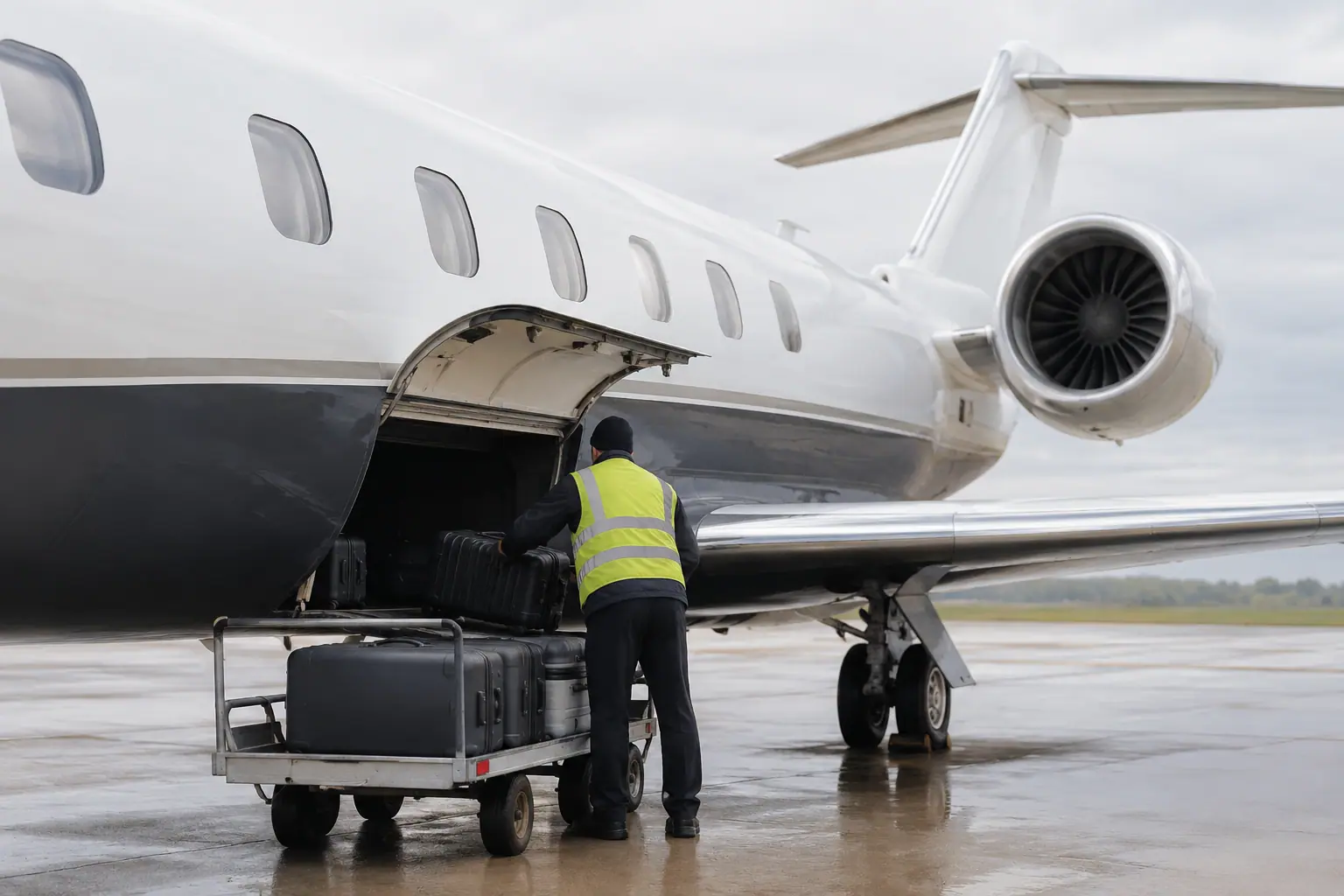
1. Tell us the trip.Give us dates, passenger count, bags and the airport you prefer. We ask about flexibility because a one-day shift can change which aircraft are available and what the flight costs.
2. We compare operators.We source quotes from FAA Part 135 operators with aircraft suited to your route. You see the tail type, estimated price and any repositioning charge rather than one blended figure.
3. Review the trade-offs.We explain where a light jet is enough and where heat or range argues for a larger cabin. International legs get a CBP arrival plan before you commit.
4. Confirm and fly.You approve the operator and the quote, and the flight is arranged under their certificate. We stay on the booking through departure if timing or weather shifts.
Frequently asked
How much does a private jet from Austin cost?
Light jet charter runs about $3,800 to $5,800 per hour, so a Chicago leg of 2 hours 20 minutes prices from $9,000 to $13,500. Midsize aircraft sit near $5,200 to $7,800 per hour and heavy jets $9,500 to $14,500. These are estimates; the final quote depends on the specific aircraft, date and repositioning.
Which airport do private jets Austin use?
Most charter flights use Austin Executive Airport at Pflugerville, with a 6,025 foot runway, or Austin Bergstrom, which has a 12,250 foot runway and full international facilities. KEDC suits light and midsize aircraft close to north Austin, while KAUS is the better fit for heavy jets and Caribbean departures needing CBP.
How long is the flight from Austin to New York?
A light jet takes about 4 hours 14 minutes over 1,302 nautical miles, with estimates from $16,000 to $24,500. Winds aloft can shift that by a noticeable margin in either direction. If you need to arrive by a fixed time, then an earlier departure gives the crew room to absorb a headwind.
Can I book an international trip from Austin?
Yes. Cabo San Lucas is about 783 nautical miles and 2 hours 13 minutes in a light jet, while Turks and Caicos runs 1,455 nautical miles and roughly 4 hours 36 minutes. Returning international flights clear CBP, and passengers need valid passports; we build the arrival window around the port's schedule.
Does summer heat affect private flights from Austin?
It does. July and August highs reach 95F and 96F, pushing density altitude to about 3,200 feet and near 3,800 at 115F. Light jets may face payload or fuel limits on afternoon departures, so early morning slots are often the practical answer. The crew calculates this for each specific flight.
How far ahead should I book a jet from Austin?
For peak weeks in March and October, a week or more gives the best selection of aircraft. Last-minute bookings are possible, but a light jet requested three days out may come from another base, adding repositioning cost. In quieter winter months, a few days is often enough.